

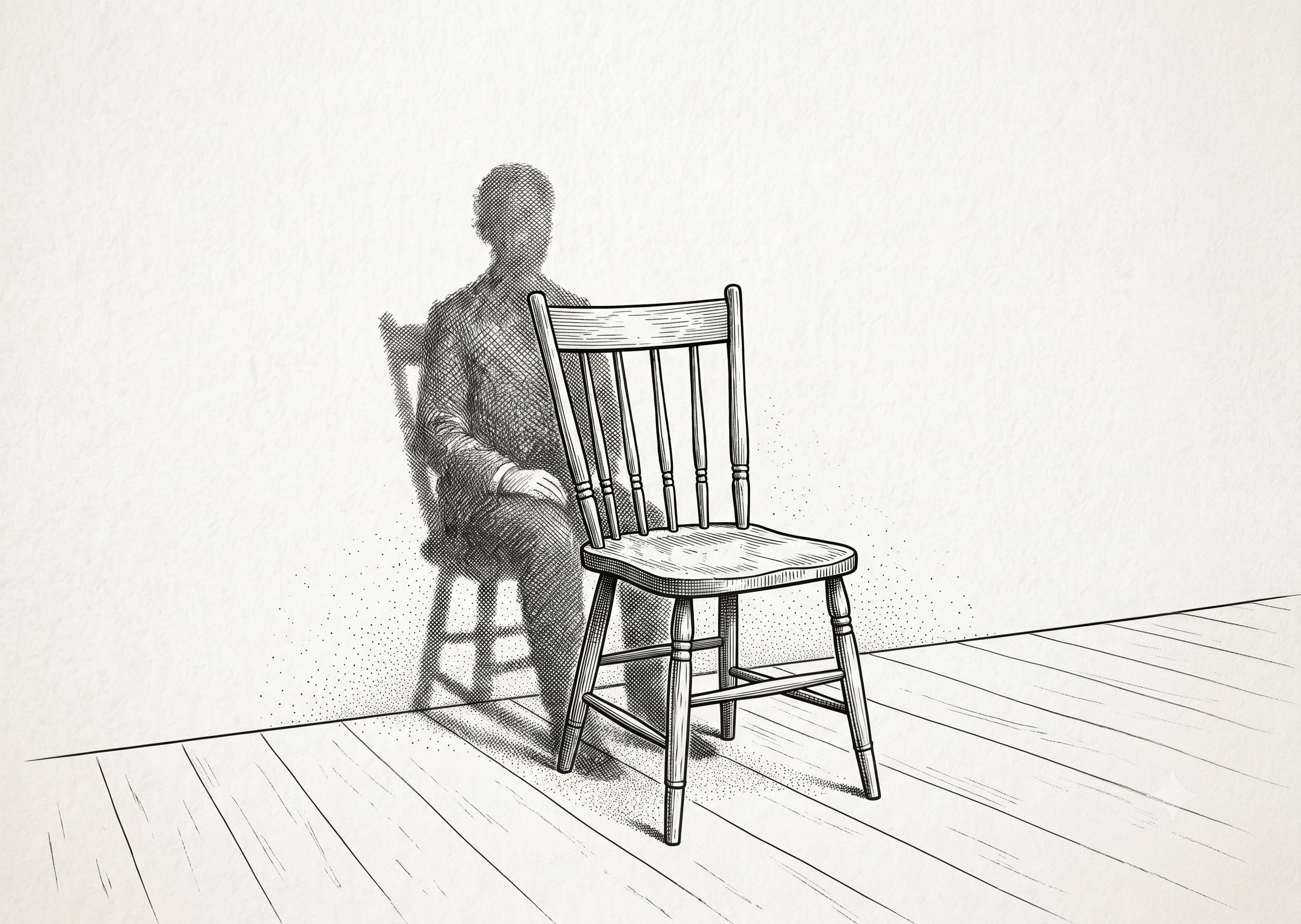
The pre-meeting work revealed something important: someone has serious doubts about the proposed timeline. In effect, they said that the schedule everyone is now nodding along to won’t survive contact with reality. The facilitator raises concern without attribution — a doubt, not a person. Almost at once, before engaging with the substance of the objection, the room starts looking for the objector. That sounds like something Sarah would say.
What Subtraction Costs
Reflect & Engage works by subtraction. It removes the social pressures that keep the group from accessing the full range of insights it already has. These pressures include power and status differences, as well as the desire to keep things collaborative. The Reflect & Engage method separates reflection from the meeting and the viewpoint from the person who holds it. People reflect alone and share their thoughts anonymously, before social gravity distorts what is said. What reaches the facilitator is a map of divergent perspectives and tensions with the names removed.
Separating the view from its author is what gives the method its power. It is also what creates a cost in the form of the ghost in the room. An anonymous view arrives with no source, and the room fills that gap with guesses. The guessing draws attention straight to the place the method was meant to avoid: off the substance and onto the source. The manifestation of the ghost isn’t a flaw; it’s a by-product of the same subtraction that yields the method’s benefit.
Why the Cost Is Worth Paying
The reason to accept the cost comes from Charlan Nemeth’s research on dissent.1 Genuine disagreement, Nemeth found, helps a group even when the dissenting view turns out to be wrong. The process of grappling honestly with disagreement makes the group think better. People who are challenged with a real minority viewpoint look harder for information, weigh more options, and notice possibilities they would otherwise have missed.
Two additional findings are less comfortable. First, a dissenter who the room knows is performing (i.e., role-playing as devil’s advocate) produces none of this benefit. Everyone knows the objection is staged, so instead of opening up the conversation, the group does the opposite and lines up reasons the original decision was correct all along. Second, and maybe worse, a real dissenter, one whose objection improves the group’s thinking, is reliably disliked for objecting.
In other words, genuine dissent is simultaneously valuable to the group and costly to the dissenter. Reflect & Engage is a bet that you can give the benefit to the group while sparing the individual the cost, because their dissent arrives anonymously and is pooled with others, belonging to no one.
Nevertheless, the ghost in the room is what’s left. In sparing the dissenter, you’ve handed the room a presence it desperately wants to name.
Banishing the Ghost
The job, then, is to reopen disagreement in the room without attaching the cost to a person. The idea is to get the group to treat the dissent as ours rather than theirs. Anything a facilitator might try here can be tested against a single question:
Does this approach raise the divergent view without forcing anyone to own it before they choose to?
It’s a tough test. “Some participants worried the timeline is unrealistic,” surfaces the viewpoint, but conjures the ghost. It all but tells the room to ask, “Who worried?” Alternatively, “What are we assuming about this timeline that deserves a closer look?” carries the same concern and removes the author completely. It shifts the question from who the skeptic is to what should we be skeptical about.
The facilitator could give the divergent idea a second origination point within the room by asking everyone to write for two minutes before anyone speaks. That way, the discussion is based on what the room just produced rather than on guesses about who raised the point earlier. The objection from the pre-work comes back, now owned by everyone and, consequently, by no one.
These aren’t parlor tricks. They are in-meeting extensions of the logic underpinning Reflect & Engage. Protect the viewpoint; drop the name.
Where My Reach Ends
The live conversation is exactly where my confidence stumbles.
Everything before the meeting, I can design. The reflection questions, the anonymizing, and the shaping of the Field Report all occur without time pressure, under conditions I control. The meeting happens once, in a room I’m not in. Reflect & Engage’s job ends before the meeting starts. I give the facilitator a “map” of the situation, some potential facilitation questions, and a couple of facilitation techniques that might fit. Then I let go.
The techniques aren’t mine. The premortem is Gary Klein’s; the groan zone is Sam Kaner’s; the practice of slowing the leap from observation to conclusion is Chris Argyris’s.2 What Reflect & Engage adds are pre-meeting intelligence and guidelines for how to use the information. Then it’s in the facilitator's hands in a room where the clock is ticking, and status and conformity pressures reappear.
Furthermore, there is a floor below which none of this works. Structure can foster psychological safety; it can’t manufacture it. Attempt to apply these techniques to a group with a culture of fear, and the silent-writing prompt yields guarded, defensive sentences rather than candid ones. Reflect & Engage can lower the cost of speaking honestly, but it can’t eliminate it.
The Handoff
Reflect & Engage works hard to allow honesty without demanding courage. The meeting is where the method ends, and something harder awaits: a live room and a ghost asking to be named. I can help the facilitator prepare, but I have to hand them the baton to run their leg of the race.
Charlan Nemeth’s work on minority influence runs through decades of experiments and is laid out in In Defense of Troublemakers: The Power of Dissent in Life and Business (2018). The contrast between genuine dissent and role-played devil’s advocacy (and the “cognitive bolstering” the staged version provokes) is among her most replicated research findings, along with the uncomfortable companion result that the useful dissenter tends to be disliked for their trouble.
See Gary Klein, Performing a Project Premortem (September 2007), Harvard Business Review. Also, Sam Kaner, Facilitator’s Guide to Participatory Decision-Making (2014), on the groan zone, and Chris Argyris, Overcoming Organizational Defenses (1990), on the Ladder of Inference.